

How to Shear a Sheep
Shearing sheep is a crucial task in sheep farming, benefiting both the health and welfare of the sheep and having economic significance for the farmers.
Benefits of Sheep Shearing
1. Maintaining Sheep Health: Excessive wool can cause overheating and discomfort in sheep. Shearing helps maintain appropriate body temperature and reduces the risk of diseases and discomfort.
2. Improving Sheep Productivity: Shearing promotes growth and development in sheep, making them healthier and thus improving lambing rates and wool and meat production.
3. Maintaining Wool Quality: Regular shearing prevents the wool from becoming too long, tangled, and dirty, thus preserving its quality and purity.
4. Economic Benefits: Wool is a valuable agricultural product. Shearing provides valuable raw materials, thereby offering economic benefits.
Frequency of Shearing
The timing and frequency of shearing sheep depend on factors like location, climate, breed, physiological characteristics, and quality of husbandry. In colder regions like Northeast China and Inner Mongolia, sheep are typically sheared twice a year. In less cold areas like Shandong and Hebei, shearing may still occur in winter if the temperature is suitable, leading many sheep farmers to shear three times per batch.
How to Shear Sheep
Sheep shearing involves using sheep shears. Before starting, lay the sheep down, ensuring the head is slightly raised and not positioned lower than the rear.
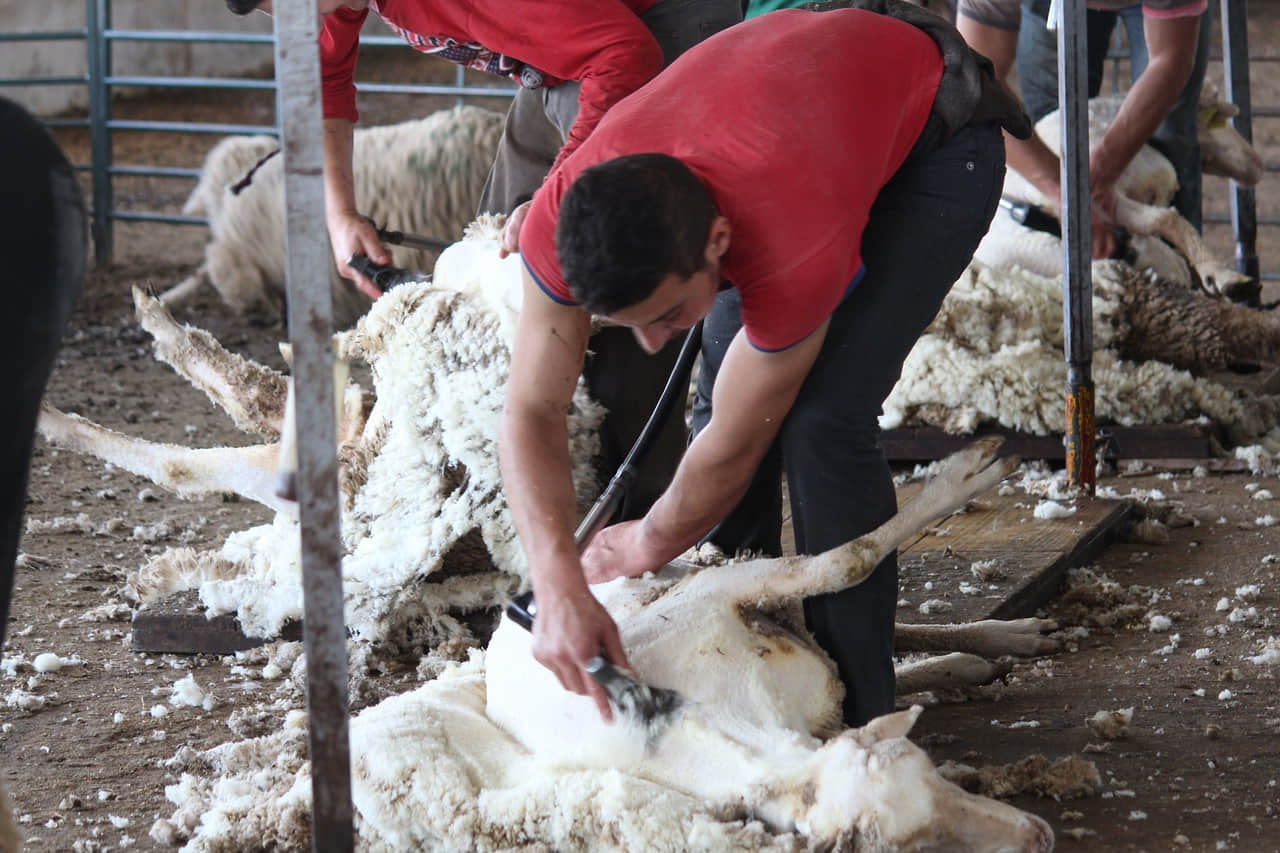
Start from the thigh area, shearing in a straight line forward, and then parallel to this line, shear all the wool off the head, then the back. After one side is done, shear the other side. The shorn wool, with tips inward and roots outward, should be rolled up and stored in a bag.
How to Collect Down Wool
The down wool of goats should be collected during molting in spring, the season for livestock to change their coats. Simple tools like wooden or metal combs are needed. The teeth of the comb should be appropriately spaced, and the tips not be too sharp. Start from the left side, front to back, top to bottom, and cross-comb. Keep the collected down wool dry, free from contamination or impurities, and store it categorically.
Precautions for Sheep Shearing
1. Sheep should fast for 12–24 hours before shearing, avoiding food and water. Wet sheep should be sheared only after the wool has dried, as wet wool is hard to shear and store.
2. Shears should be close to the skin, shearing the wool off evenly in one go, keeping the stubble low. If the stubble is too high, avoid re-shearing to prevent double-cut wool, which affects wool utilization.
3. Prevent the mixing of feces, weeds, etc., into the wool. Keep the fleece intact for grading and sorting.
4. Shearing should be quick, and flipping sheep should be gentle to avoid rumen tympany or intestinal torsion, causing unnecessary loss.
5. Prevent skin injuries, especially around the soft-skinned areas of rams and ewes. In case of cuts, disinfect, apply medication, or stitch immediately to prevent maggots and ulceration.
6. After shearing, promptly clean and process the wool, ensuring its cleanliness and quality, and providing appropriate care and nutrition to the sheep.
7. Preferably shear in good weather. If it gets cold post-shearing, move the sheep to a warm area, and treat any colds promptly.
In summary, shearing is vital for maintaining sheep's health and welfare, enhancing productivity, and obtaining economic benefits. Ensure to follow proper methods and precautions during shearing for optimal results and safety.